
At a Chinese wedding, food is the highlight of the event and plays a central role in the celebrations. As well as symbolising abundance and joy, the banquet is a gesture of thanks and appreciation to the relatives who have raised the bride and groom. The wedding banquet is known as xǐ-jǐu (喜酒), which means joyful wine. In Chinese culture the wedding banquet is a custom, a cultural tradition that is often more important than the wedding itself. Each dish conveys something different, from blessings to prosperity and family unity, and the couple chooses symbolic dishes that represent their union and wishes for the future. There are usually two separate banquets. The primary banquet is hosted on the bride’s side and is elaborate, consisting of 5-10 courses; the second (and usually smaller) banquet is hosted on the groom’s side.
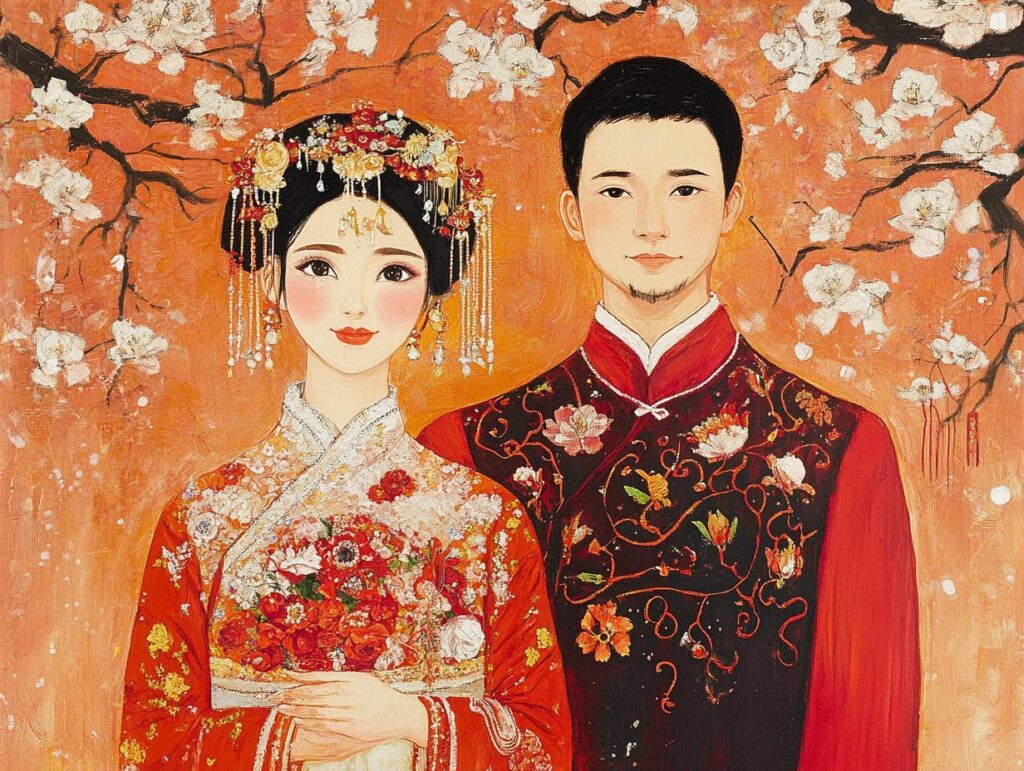
Traditional Wedding Dishes and Their Symbolism
Wedding dishes are selected by the couple. Each dish conveys something different, so couples choose the dishes that best represent them, their relationship, their union and their plans for the future.
Some of the most common traditional wedding dishes in the banquet include:
- Whole Fish: Representing abundance and unity. The Chinese word for fish is yu (鱼), which sounds similar to the word for plentiful, or surplus.
- Dumplings: Symbolising wealth and good fortune due to their resemblance to gold ingots.
- Roast Duck or Chicken: Signifying fidelity and prosperity, this dish is often served whole to represent completeness.
- Noodles: Symbolising longevity and a long and happy marriage, noodles are a staple at Chinese weddings.
- Lobster and Chicken: Representing the unity of male and female; the pairing of dragon and phoenix in Chinese mythology signifies the unity of yin and yang energy.
- Red Bean Soup: With lotus seeds and bak hop, red bean soup is a wish for the newlyweds to have a hundred years of togetherness.
- Squab or Fowl: Symbolising peace, the tender meat of pigeon is offered to the newlyweds to wish them peace as they start their new life together. Quail is also offered to each guest so they each experience a peaceful life.
- Shark Fin Soup: Symbolising prestige, this is an expensive dish that is often eaten at celebrations.
- Scallops: Representing fertility and the raising of children.
- Sticky Rice Balls (Tangyuan): Associated with family togetherness and sweet relationships.
Cultural Rituals and Banquet Structure
A traditional Chinese wedding ceremony consists of six basic procedures: a proposal of marriage (nacai), requesting the bride’s name and date of birth (wenming), sending betrothal gifts (naji), sending wedding gifts to the bride’s house (nazheng), requesting the date of the wedding (qingqi), and fetching the bride in person (qinying).
The wedding itself consists of many elaborate parts, including:
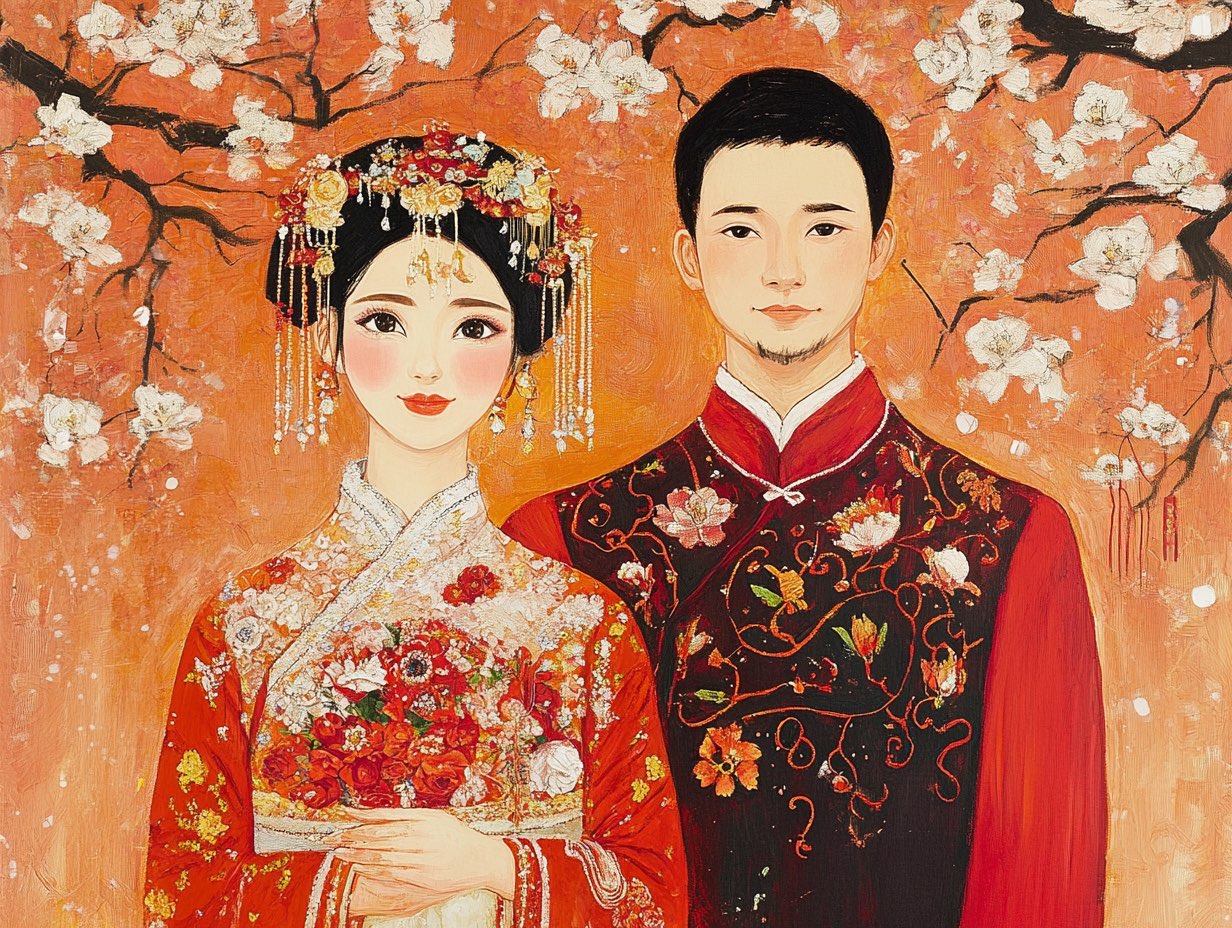
- The procession: Before the wedding, the bride is helped to tie her hair with colourful threads and she dresses in a red skirt, as red symbolises happiness. The bride then cries with her mother to show her reluctance to leave home, before being led or carried from her home to the groom’s home. The wedding procession consists of a traditional band, the bride’s sedan, the maids of honour, and the bride’s dowry. Common dowries include scissors (like two butterflies that never separate), rulers (indicating acres of fields) and vases (for peace and wealth).
- Welcoming the bride: The wedding procession stops at the groom’s door, where the groom is often met with difficulties that have been set in his path; after overcoming these problems, he can pass to see his wife.
- Wedding ceremony: When the sedan arrives at the wedding ceremony, there must be music and firecrackers. The bride is led along a red carpet, and the groom, who also wears a red gown, must kowtow three times to worship the heaven, parents and spouse. The couple pays respect to the Jade Emperor, the patron family deities, deceased ancestors, the bride and groom’s parents and other elders, and they pay respect to each other. The new couple then go to their bridal chamber and guests are treated to a feast.
- Wedding banquet: There are lots of ceremonies, such as the bride presenting wine or tea to parents, spouse and guests. The banquet itself is typically 8-10 courses long and is based on the couple’s choices. As well as showing appreciation to those who have raised the couple, the banquet is also designed to ensure the relatives on each side meet the relatives on the other. Out of respect for the elders, wedding banquets are usually formal and traditional. On the night of the wedding day, there is a custom in some places for relatives or friends to banter the newlyweds to help them get familiar with each other. On the third day of the marriage, the new couple go back to the bride’s parents’ home and are received with a dinner party.
Modern Influences
Chinese weddings are rich in tradition and culture; however, many modern couples want to incorporate both traditional and contemporary elements into their wedding. The easiest way to do this is by combining traditional dishes with modern touches in the banquet menu. 5-10 courses are still a must-have, but the dishes chosen can range from meals selected for their significance to dishes the bride and groom simply enjoy, or traditional dishes prepared in a more modern way.
Traditional Chinese weddings are steeped in a rich culture and history that deserves to be celebrated, and as you’ve seen, the most important element of the wedding is the food. In China, food is an incredibly important part of the culture, so we invite you to celebrate the richness of authentic Chinese wedding dishes and sample a few for yourself.
Taste the tradition. Visit Lulu Wild in Birmingham for an authentic Chinese dining experience worth celebrating.